
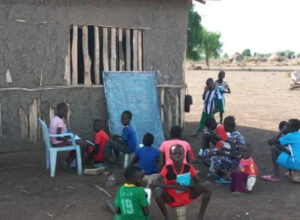
 Despite the enormous benefits of being able to attend school and receive an education, the costs involved in sending children to school in Uganda are prohibitive for the majority of slum residents. The cost of school fees, uniforms, pens, paper, pencils, shoes and transport means that a large number of children have no hope of attending school. Poverty levels make it extremely difficult to develop any savings and often money for school fees is instead spent on greater needs such as food. Education means opportunities and empowerment. Through supporting education, we are giving children the means to obtain necessary skills that will give them a better future in life.
 Shubaika will be constructing a school in the next 2 to 3 years. We want to build a boarding school in a peaceful rural area of Uganda. We want to create a family environment for underserved children where they can connect with nature, learn the importance of agriculture, and play freely. We plan to purchase land to build classrooms, boys and girls boarding rooms, facilities for bathing and latrines, a kitchen, and accommodations for staff and volunteers. The area will include farmable land and an animal barn to support dietary needs of the children. In addition to our initiatives to enrich child education with cultural arts/music and sports we want to dedicate an area for performances and football (soccer). Please visit our donation page to help fundraise for our Rural Boarding School or contact us to volunteer to help build the school.
